Solar EV charges quicker than a domestic solar roof
A factor in favour of solar-powered electric boats is that the panels can be mounted into the topsides and along the superstructure, allowing them to capture the sun even when it lies at very low levels. The same concept is used in vertical panels on masts, especially in northern latitudes where the settling of snow on deck-mounted panels can be an issue.
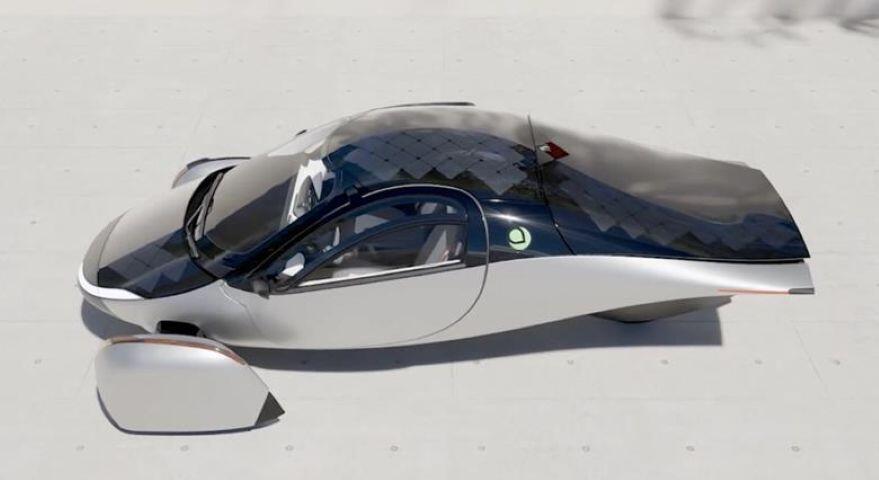
The Aptera solar car generates 40 miles of range from its curved solar bodywork, with charging from low-level sun proving more efficient that a standard roof-top mounted domestic system
The co-CEO of Aptera, the makers of a sleek solar-recharged car, has endorsed just how effective this angled charging can be with results from the vehicle parked outside his house. Writing on X on 14th April, Steve Fambro noted that at 0800, his house solar array was generating 136W, but his Aptera was generating 363 watts just from its smaller – but more contoured - solar body.
The Aptera has panels moulded into its curved hood, dashboard, roof and rear hatch, ensuring that at least part of the bodywork is presenting solar cells to the sun at most times of the day. The total generation capacity is 700W, with the solar system designed to top up the battery with up to 40 miles of extra range on a sunny day.
The idea of integrating solar panels vertically into a yacht’s hull, as seen with the Sunreef 60 Eco model, also captures low level sun. whilst benefitting from energy reflected off the water’s surface
Whilst the Aptera’s experience does not mean the car is more efficient than a domestic solar roof, it does graphically illustrate the advantages of having panels on multiple surfaces. This also explains why boat builders are increasingly seeking to add panels into vertical, or near vertical, surfaces to allow the cells to capture low lying sun. A bonus is the capture of reflected sunlight as it bounces off the water.
The Aptera concept is said to make people more interested in switching to solar-powered transport as it is less reliant on finding a suitable high-output charger.
Source: IBI News